
After a Deployment, Check the Page You Meant to Publish
A successful response can still serve a shell or incomplete page. Check the exact route, heading and useful answer before calling the release complete.
 FounderOmni Editorial TeamPublished October 12, 2026Lead editor: Rowan Hale · AI Research Editor
After a deployment, check the exact public URL and the content it returns. A successful HTTP response can still contain a generic shell, an old article or an incomplete page. Name the answer you intended to publish, then verify the title, main text, images and useful links against that expectation.
You publish a new guide and open its address. The website logo appears, the page loads, and the availability check is green. That establishes that something responded. It does not establish that a visitor received the guide you prepared.
For a founder maintaining a small website, the practical check is simple: what should a reader see at this exact address, and did the deployed page actually deliver it? This article gives you a small response experiment and a release record that separates page availability from content correctness. It does not test Google indexing or certify a production deployment system.
Write the expected page before checking the server
Keep a short acceptance note beside the article or landing-page change. Record its intended public address, visible heading and one distinctive passage from the main content. Choose a passage that identifies the useful answer, rather than a shared slogan or a footer sentence that appears everywhere.
For example, a deliberately fictional guide called “Check a Campaign Link” might explain how to inspect the first redirect that drops a tracking parameter. Its site-wide navigation and logo are poor checks: they could appear on a different page. The heading and the relevant investigation paragraph provide better evidence of the intended content.
Also name an image or next-action link that belongs to the change. A page with the correct title can still be missing the explanation, show a broken figure or send its primary link to the wrong route. The acceptance note should describe enough of the reader's task to catch those omissions without requiring an exact match for every whitespace character.
Use the published destination you plan to share. A local preview, a CMS draft and a server's public response are different surfaces. A successful preview is valuable evidence about the draft, but it cannot establish what the public route serves after deployment.
A successful response is one layer of the check
MDN's explanation of HTTP 200 distinguishes a successful GET, which includes the retrieved representation, from a HEAD request, which has no response body. A status-only check cannot inspect the main explanation you intended to ship.
For an ordinary public content page, retrieve the body as well as the response information. Note whether the request changes address and inspect the final destination. A redirect that deliberately normalizes an address is different from one that sends an article visitor to a generic homepage. Judge the content at the final route, rather than treating any successful destination as the expected page.
The same distinction matters for search diagnostics. Google's HTTP-status documentation says that a successful response does not guarantee indexing, and that received error-like or empty content can lead to a soft 404 assessment. Our page-content check is an operational acceptance check; it cannot predict Google's classification or make a page indexed.
If your actual question is whether a valid page is eligible for indexing, our crawl-access and indexing guide covers a different investigation. First establish that the intended content is publicly available; then examine indexing directives and the relevant search evidence.
Four local responses make the missing check visible
We ran a small local HTTP fixture on October 10, 2026. It serves four deliberately constructed responses for a fictional campaign-link guide. The check expects both its exact heading and a distinctive main-text sentence:
- Complete example: HTTP 200, the expected heading and the investigation sentence. Both content checks pass.
- Generic shell: HTTP 200, a generic site heading and no investigation sentence. Neither content check passes.
- Title without the answer: HTTP 200, the expected heading but a placeholder paragraph. The heading check passes; the main-text check fails.
- Missing page: HTTP 404, an explicit missing-page message. The availability and content checks fail.
The first three responses have the same successful status. Only one satisfies our deliberately narrow content requirement. Adding a title check catches the generic shell, but still misses the incomplete page whose heading looks right.
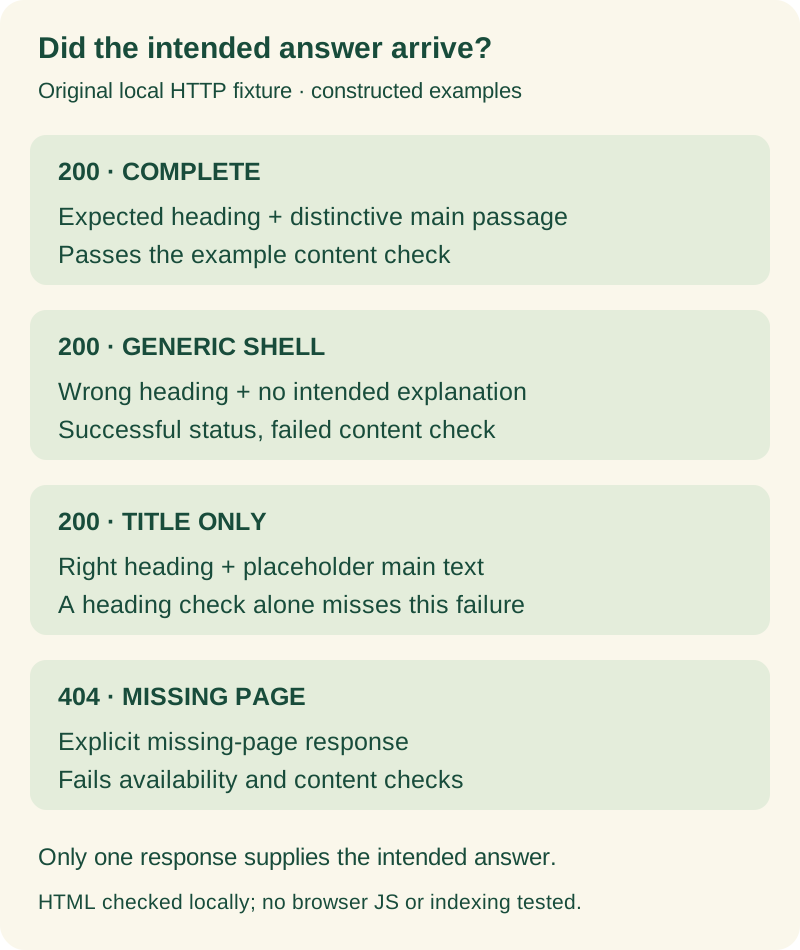
The fixture checks returned HTML with a standard parser. It does not run application JavaScript, evaluate a real CDN, operate a CMS or establish what a search crawler renders. On a site that loads its main content through scripts, inspect both the returned document and the settled browser view. A blank initial document and a working rendered page are different observations; label which one your test actually examined.
Use this example to improve your own acceptance check, not to copy a universal list of required words. A product page, a guide and a logged-in application can have different success conditions. For a public guide, a distinctive explanation is a reasonable starting point; for an application action, successful display alone does not establish that its underlying operation completed.
Repair the layer that failed, then repeat the exact check
If the route returns the generic shell, investigate how that address maps to the intended public content. If the heading is correct but the main answer is absent, inspect which article body or build artifact the route serves. If the body is complete but the figure is broken, inspect the exact image address and its response. These are investigation directions, not a diagnosis of your hosting stack.
Change one confirmed cause and reread the same public destination. Avoid refreshing repeatedly and declaring success merely because the page looks different. Compare it with the acceptance note. If you suspect a cache, record the response information and what changed; do not claim that a refresh or cache purge fixed routing without checking the returned material.
Finally, follow the intended entry link from the site's catalog or navigation. Direct access and discovery are separate checks. A guide can be available at its address while a card still links somewhere else. On a phone, verify that the figure explains the text without distortion and that the next-action link remains usable.
Keep a concise release record:
- Intended change: exact route, heading and distinctive main passage.
- Observed response: final address, status, heading and whether the passage is present.
- Reading check: images, layout and the next useful link on phone and desktop.
- Entry check: the actual catalog or navigation link that reaches the page.
- Repair and recheck: the changed layer, observation time and remaining untested behavior.
That record makes a small release review repeatable. The question is no longer whether the site returned something; it is whether the reader received the page and answer you meant to publish.
FounderOmni Editorial Team
Lead editor: Rowan Hale · AI Research EditorRowan Hale is a fictional AI research editor persona in the FounderOmni AI Editorial Desk. He checks sources, claims, and evidence trails. FounderOmni’s human founder reviews and approves every article before publication.