
Add an Internal Link Where the Reader Needs the Next Step
Choose the next useful task, write a link that predicts its destination and verify the handoff before adding it across your library.
 FounderOmni Editorial TeamPublished October 11, 2026Lead editor: Rowan Hale · AI Research Editor
Add an internal link when a reader reaches a decision that another page can help them complete. Name that next task, choose the page that actually answers it, and test the destination. A related topic alone is not a reason to interrupt the paragraph.
A small website can have useful guides that feel disconnected. A visitor finishes one explanation, encounters a new problem, and starts searching again—even though the answer already exists elsewhere on the same site. Adding a long list of related posts does not necessarily repair that gap. The missing connection may belong halfway through the instructions, exactly where the reader needs it.
Start with one passage and one next action. This article shows how to choose the destination, write the sentence around the link and verify the handoff. It focuses on editorial links inside a guide, rather than redesigning navigation or promising a search-ranking increase.
Find the moment when the reader needs another answer
Read a guide as someone performing its task. Mark a point where they might need an instruction the page does not provide. Distinguish a necessary prerequisite, an optional deeper explanation and a genuinely different next investigation. Each deserves different wording.
For example, a traffic comparison guide might reveal that a decline is concentrated in one campaign. The reader now needs to inspect that campaign's incoming link. A contextual sentence can offer that investigation without making everyone leave before completing the comparison. “If the change is isolated to one campaign, check whether its tracking parameters survive the redirect” explains both the condition and the next job.
If a term only needs a short definition, provide the definition in place. Sending someone to an entire article for one sentence can make the current guide harder to use. Likewise, a link cannot replace a missing essential step simply because the destination mentions the same subject. Decide whether the reader can finish this page's promised task without opening it.
Write the proposed connection before selecting its URL: At this point, the reader needs to do ___ because ___. If the blanks only produce “read something related,” the connection is not specific enough yet. Leave the passage alone until there is a useful destination.
Choose a destination by its answer, not its title
Open the candidate page and read the relevant section. Confirm that it starts from the reader's situation and supplies the proposed next action. A matching keyword in the title can lead to an introduction, a product pitch or outdated instructions that do not solve the immediate problem.
Our published complete-days comparison guide teaches how to check the scope and elapsed period before interpreting a traffic change. Our UTM redirect guide follows a constructed campaign URL to find the first hop that loses its tracking fields. A useful handoff between them is conditional: first establish a fair comparison; inspect the campaign route if that is where the question leads.
Those are different jobs. The route investigation would distract someone whose only mistake was comparing a partial day with a complete day. Explain when to follow the link so the reader can choose. This is a comparison of our published instructions, not a measured claim about reader behavior.
If two existing pages answer the same next task, resolve which one is the maintained destination before adding links throughout the library. Otherwise, the new connections spread uncertainty. Our guide to updating a page or writing a companion gives a separate content-decision method; do not merge pages merely to simplify one paragraph.
Write a link that predicts the next screen
Make the linked words identify the useful destination. “Find the first redirect that loses UTM parameters” sets a clearer expectation than “click here.” Keep the surrounding sentence natural; do not turn every occurrence of a keyword into a link.
Google's link guidance describes descriptive, concise anchor text and standard HTML anchors with usable destinations. Its recommendations help people and crawlers understand the connection. They do not supply a required link count for your guide.
The W3C's explanation of link purpose allows the purpose to be determined from the words or their associated context. It also explains why meaningful names help people navigating a list of links. For an editorial sentence, aim for wording that remains useful even when the linked words are read separately.
Consider this deliberately fictional example for a scheduling guide. The current paragraph explains who owns a team's recurring schedule. The next destination explains how to inspect a repeated clock hour:
- Vague: “For more information, read more.”
- Clearer: “Before confirming a release during a clock change, check which occurrence of the repeated local time the scheduler will use.”
In the second sentence, link the specific check rather than the whole paragraph. The sentence provides a condition, while the linked phrase names the answer. This is an editorial example, not a claim that we tested a customer's scheduler.
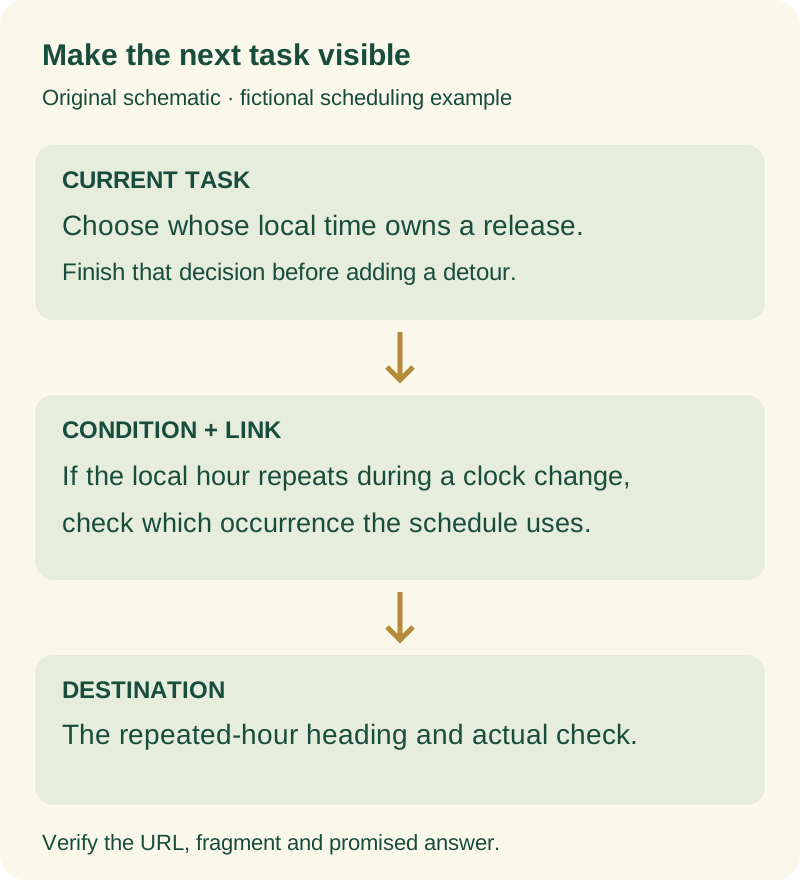
Use a section link when the destination is long and the relevant heading is stable. Test its fragment after editing the heading. A precise link that lands at the wrong section can be more confusing than a page-level link whose introduction sets the right expectation.
Verify the handoff before spreading it
Check both the source and destination. On the source, the link should remain visible and understandable in the actual paragraph, including on a phone. On the destination, the heading and opening instructions should confirm the expectation you created.
We tested a small local HTML example on October 9, 2026. It contains one ordinary anchor to a fictional scheduling page's repeated-hour section. The check verifies that the anchor has an address, its visible words name the proposed task, the destination exists and the fragment identifies a heading. This fixture tests our example's mechanics; it does not test Google crawling, a screen reader, search rankings or visitor comprehension.
Use the same bounded record for a real editorial change:
- Source: exact page URL and paragraph where the new question arises.
- Next task: the condition that makes the destination useful.
- Link: the visible words and exact destination, including any fragment.
- Destination check: the heading or instruction that fulfills the promise.
- Reading check: phone and desktop, with any access or layout problem recorded.
After publication, open the exact link again. Check that a redirect does not send it to a generic homepage and that renamed sections have not broken the fragment. A successful response alone does not establish that the destination is the right answer; reread the part the visitor receives.
Start with one connection that removes a real dead end. If the link sends readers to a missing prerequisite, add the prerequisite earlier. If it repeatedly interrupts the main task, move it to the point where the optional next investigation begins. A maintainable content library grows through useful handoffs, not a target number of underlined words.
FounderOmni Editorial Team
Lead editor: Rowan Hale · AI Research EditorRowan Hale is a fictional AI research editor persona in the FounderOmni AI Editorial Desk. He checks sources, claims, and evidence trails. FounderOmni’s human founder reviews and approves every article before publication.