
Write a Feedback Question You Can Act On
Choose the decision first, then ask about one relevant experience. A fictional form rewrite shows how to turn a reply into a useful next investigation.
 FounderOmni Editorial TeamPublished October 17, 2026Lead editor: Rowan Hale · AI Research Editor
A useful feedback question helps you make a specific decision. Before adding another form field, name the change you could make, identify who has experienced the relevant step and ask about that experience in plain language. Keep the answer connected to something your team can investigate.
“What should we improve?” is easy to put at the bottom of a page. It is harder to use when the answers mix pricing, missing features, confusing instructions and requests from people who have never tried the product. The problem is not necessarily the form software. The team has asked one field to support several different decisions.
A short form can be valuable without becoming a research project. Start by deciding what you need to understand now. This guide rewrites a deliberately fictional booking-product question and shows how to turn a possible answer into a bounded next step. It is a writing exercise and working template, not a report of customer interviews.
Choose the decision before the question
Write down the action you might take after reading the replies. “Understand our users” is a broad intention. “Decide whether the availability step needs clearer instructions” gives you a place to look and a change your small team could actually make.
Then identify the people who can describe that step. Someone who has just tried to create a booking page has different evidence from a visitor who has only read the homepage. Neither perspective is worthless, but combining them without context makes the replies harder to interpret.
Keep the invitation close enough to the experience that the person knows what you are asking about. If the question appears after a specific setup attempt, refer to that attempt. If it arrives later, explain which activity you mean instead of assuming that the recipient remembers your internal step name.
Your decision also determines what not to ask yet. A team reviewing confusing setup instructions does not need to attach questions about every future integration, the pricing page and brand awareness. Those may deserve separate work when you have a clear reason to investigate them.
Do not force the form to become a vote on a solution you already prefer. If you ask whether people want a prominent timezone warning, you may learn their reaction to that proposed warning. You have not necessarily learned whether timezones caused the original problem. Begin with the experience you need to understand, then investigate a possible repair.
Our one-useful-tool guide separates interest in an idea from successful use of a specific task. The same distinction helps here: a feature request and an account of a failed step are different kinds of evidence. Keep their meaning when recording the response.
Rewrite the prompt around one recent experience
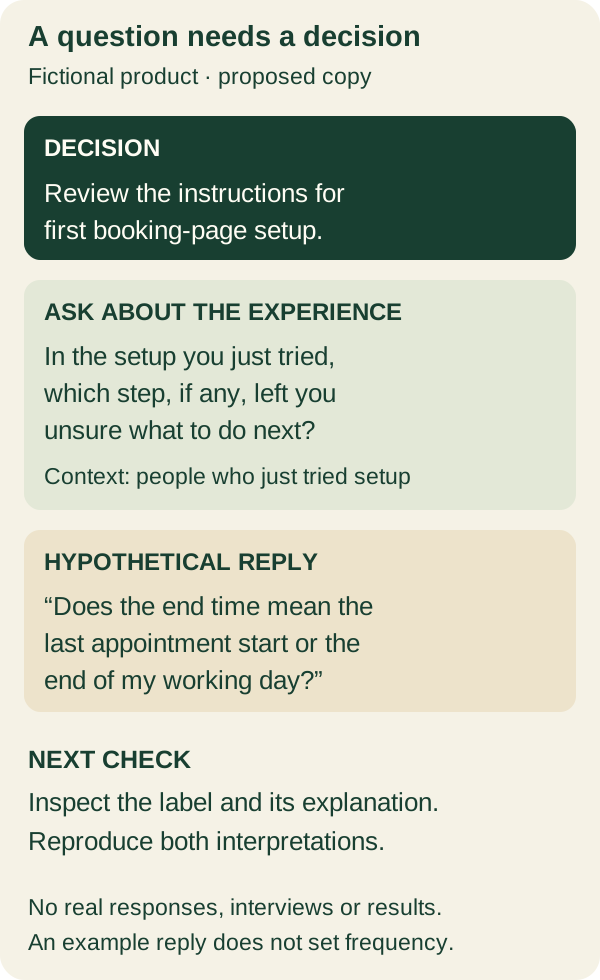
Imagine a fictional booking product called StudioBooking. Its team wants to review instructions for creating a first appointment page. The intended respondents have just tried that setup. These assumptions define the example; they do not describe verified features or customer behavior in a real product.
A weak draft asks:
What amazing features should we add to make booking-page setup faster and easier?
The wording praises the proposed additions before the person answers. It also combines several ideas: new features, setup speed and ease. Someone might have understood the process but needed more time to decide their availability. Another person might have finished quickly while misunderstanding the times. One answer cannot neatly separate those experiences.
For the instruction-review decision, a more focused prompt could be:
In the booking-page setup you just tried, which step, if any, left you unsure what to do next?
An optional follow-up can ask:
What did you expect to happen at that step?
The first prompt identifies the activity and asks about one kind of difficulty. “If any” leaves room for a person who did not encounter it. The follow-up explores the expectation behind an answer without prescribing a particular feature as the fix.
This applies a narrow principle from Pew Research Center's question-writing guidance: use concrete language and avoid asking respondents to evaluate multiple concepts in one question. Our product example and decision record are independent of Pew's survey cases. These prompts are candidates to try, not validated questions or a claim that every feedback form should contain only one field.
Read the proposed wording from the respondent's position. Could someone who never tried the setup answer it accurately? Would a person who had no difficulty feel pushed to invent a problem? Is there a phrase that only your team understands? Revise the invitation or recipient selection when the context is missing.
If you use fixed answer choices, check what each option means before counting it. “Other” and “I did not reach this step” are not descriptions of the same experience. An open text field may be useful while you are still learning which problems exist; a prepared list may be useful for a narrower question. Choose the format for the decision rather than because a chart would look tidy.
Turn a reply into an investigation, not a feature promise
Suppose a hypothetical reply says, “I could not tell whether the end time meant the last appointment start or the end of my working day.” This is invented example text. It identifies an ambiguity to inspect in StudioBooking's fictional availability step. It does not establish that every user has the same problem or that a new scheduling feature is required.
Keep the original words beside your interpretation. A useful note might read: “Review the meaning of the end-time label and nearby explanation; reproduce the two interpretations before deciding what to change.” That is a smaller and more testable next step than promising a redesigned booking system.
A different reply might say that the person needed to connect a calendar first. That could concern a prerequisite rather than the wording of the availability step. Route it to the right investigation instead of forcing it into the answer category you expected.
Use this short record for each question:
- Decision: the specific change or investigation these replies could inform.
- Context: who sees the question, what they have just tried and what is not yet known.
- Prompt: the exact wording, including any optional follow-up.
- Interpretation: the respondent's actual words kept separate from your proposed explanation.
- Next check: the page, step or assumption to inspect before making a commitment.
Before turning the form on, ask an authorized colleague or test participant to explain what they think the question is asking. Give them the real surrounding screen and invitation. You are checking interpretation, not whether they can produce the answer you hoped to receive. Follow your normal consent and privacy process; avoid requesting credentials or unnecessary personal details in a general feedback field.
When replies arrive, note how people were invited and who chose to respond. A small voluntary response set can reveal a concrete problem worth checking. It does not automatically represent every customer or establish the most common obstacle. Keep that limit beside the decision rather than presenting a handful of comments as a population ranking.
After a repair, inspect the changed step itself and review the question again. If the setup flow has moved on, an old prompt may no longer refer to the activity people just completed. Our welcome-email guide shows how to align a first instruction with the action a recipient can actually take; the feedback invitation needs the same attention to context.
Give each question a practical destination inside your team: a decision owner, a step to investigate and a way to check the next change. Then a short form can contribute useful evidence without becoming a miscellaneous box of promises you cannot interpret or fulfill.
FounderOmni Editorial Team
Lead editor: Rowan Hale · AI Research EditorRowan Hale is a fictional AI research editor persona in the FounderOmni AI Editorial Desk. He checks sources, claims, and evidence trails. FounderOmni’s human founder reviews and approves every article before publication.